Category Archives: Museums
Apples, Flowers And Bells. 15th September
Leamington Spa
The Heritage Open days are keeping us busy. Today we got the train over to Warwick as there were a few things there that appealed to us. Handy hint, if you want to do this journey without your boat go by train, not by bus. My train fare was £1.80 return compared to £5.50 on the bus, only downside is that the bus takes you closer to the town centre than the train, but not by miles.
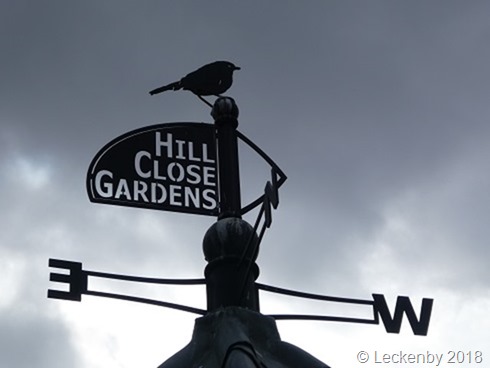
We’d selected three places to visit, Hill Close Gardens, The Court House and St Mary’s Church. Starting off at the furthest we found our way to the Gardens. Just by the race course hidden away (there are brown signs to it) we came in through the visitors centre. We expected to only be there for an hour tops, but found ourselves weaving through the gardens for two.
Hill Close Gardens are rare survivors of Victorian gardens once used by townsfolk who lived above their businesses, to escape the busy town. Back yards were full of wash houses, workshops and privies, no room for flowers or grass. So these businessmen rented a plot of land on the outskirts of town. In 1845 Hill Close pasture land was divided up into plots that Warwick people could rent. In these Detached Gardens they planted apple trees, grew fruit and veg, kept pigs and chickens and built small summer houses from which to enjoy their gardens. At a later date people could buy their gardens and by the early 20th Century parts were sold off for housing, but what remains today has been saved and restored by volunteers.
![]()
By the 1990’s most of the gardens had been sold off, but 16 remained, 2 still tended, the other 14 in very bad shape. By 1993 the council had bought much of the land and planning permission had been granted for 30 new houses to be built, the locals were stirred into action researching the site, one of only four left in the country. By 1994 local activists had managed to get four of the summer houses Grade 2 listed so the development was halted. The gardens themselves became Grade 2* listed shortly afterwards. By 2000 the council had helped to set up a trust to manage and restore the gardens for all to enjoy.
Heritage Lottery Funding in the mid 2000s enabled major restoration and by 2008 the gardens were opened up to the public frequently.
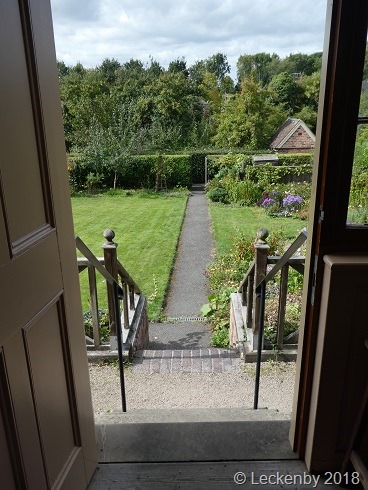
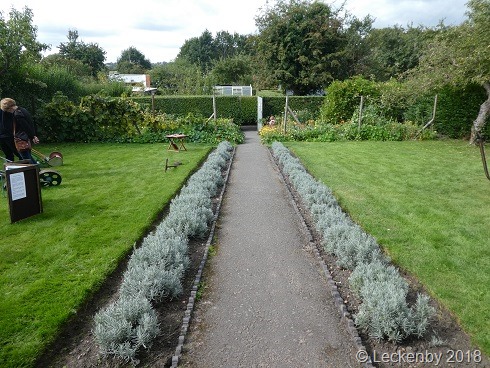
Each garden has a short history about its owners and has been laid out how it once would have been.
![]()
![]()
![]()
60 varieties of apples grow here, some ruby red, some huge, some abundant on their trees, all producing many windfalls.
![]()
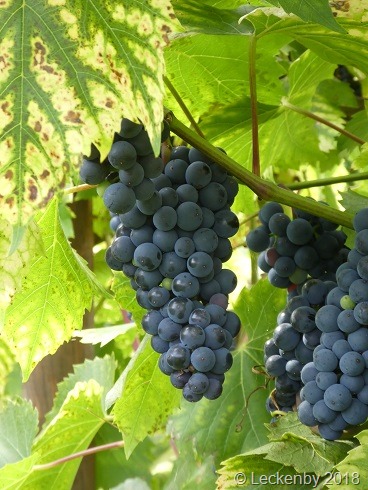
Grape vines, figs, pears, beans (how are yours Frank?), courgettes, all sorts.
![]()
![]()
![]()
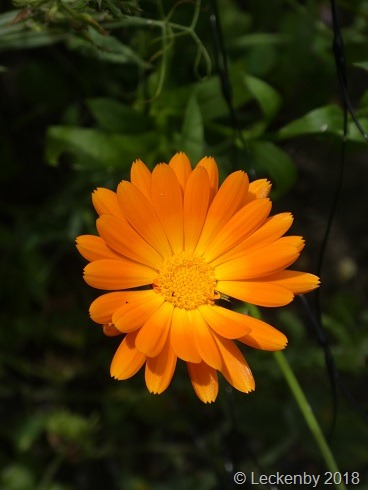
We were also taken aback by the amount of colour still in the flower beds, oranges, reds and purples shouting out at us.
![]()
![]()
![]()
The summer houses, small with their fireplaces, look out over lawned areas all hedged in for privacy from one another. These are very smart posh allotments lovingly cared for and so worth a visit.
We left by the town entrance hidden away behind a modern development and made our way into town. Hungry we decided that we’d have lunch before looking at The Court House. The Market Place Pantry had a free table so we enjoyed toasted cheese and ham sandwiches of full gluten and non gluten varieties followed by a slice of cake each, all very tasty.
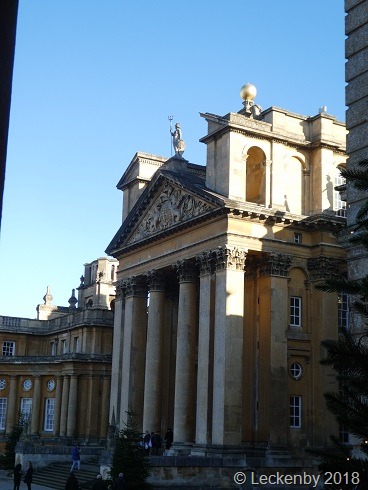
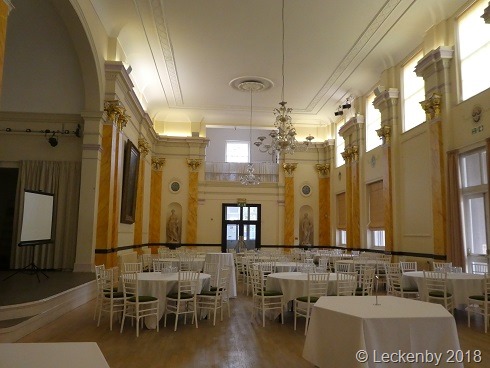
By now we’d missed the start of the tour, but went to have a look at The Court House ourselves. The tour was just finishing and they must have been given access to other areas that we couldn’t get to see. The ballroom upstairs was open but that was pretty much it, we’d seen the display downstairs last time we were in Warwick. So we walked up the road to get in line for the tour of the Bell Ringing Chamber at St Mary’s.
The church is being filled with poppies at the moment. A huge community project to mark the end of WW1 is underway. Panels everywhere are already covered in knitted, crocheted, paper, felt and tissue paper poppies. The main columns have been covered in black fabric and poppies are starting to be applied to them too. By November the whole church will be a riot of red. Intermixed with all the poppies there is the occasional white and purple ones. The white are for conscientious objectors. The purple for animals. The other day I came across a poppy I’d made for my friends in Scarborough that must have got away from the others, so if we end up coming this way I’ll drop it off to be added to the thousands.
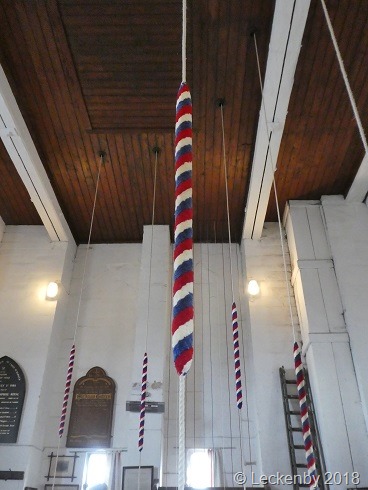
Shortly before 4pm we were allowed up the circular stone staircase to the bell ringing chamber. St Mary’s bell chamber is built at the West end, added on, as the ground wasn’t thought to be stable enough to carry it over the main church. We were joined by about twenty others along with four of the bell ringers. There are ten bells, the oldest dating back to 1701, the current clock from 1901. The clock in recent years has been electrified saving a twice weekly job of winding it up, but this has meant that the quarter hour chimes are just slightly out at the moment due to this summers hot weather.
A model of how the bells work with their wheels was demonstrated to us and then a bell was rung. Large boards around the room celebrate the peals that have been rung for certain occasions and under a box (used to stand on) there is written a note to mark Queen Victoria’s death. Much history has been marked by the ringing of the bells.
![]()
After we’d had everything explained to us we then took our time to climb the next 40 or so steps to see the bells. I’m not too keen on heights and Mick normally does such things on his own, but I felt today the official photographer should be on hand. The floor a metal grid was a touch unnerving for me, but once the ringers started to explain about the bells and point out the hammers etc I felt a lot better. Our visit here was timed so as not to coincide with any bells ringing! Then we all made our way up another 50 or so steps to the top of the tower.
From here we could see for miles. The race course, the castle stood out very easily. Leamington Town Hall and church too. We tried to spot the Hatton flight of locks, we knew where it should be but it was being shy amongst the many trees. We’ve only done the flight in spring or autumn and wondered if you still get a good view of the church at this time of year.
I still don’t understand how people can stand leaning against the bars looking over the edge of such buildings, I can not get closer than two foot away. But I did my best and took photos at arms length.
Back down the stairs, much easier to descend backwards, there was chance for people to ring the bells. Mick held back, but I could tell he really wanted a go and in the end he succumbed, not having to jump into the air as much as the younger members of our party.
A very good day had by all. Except me!
0 locks, 0 miles, 2 trains, 16 gardens, 60 varieties of apples, 2 hours around the gardens, 2 toasties, 2 pots of tea, 2 slices of cake, 1 tour missed, 10 bells, 1701, 1901, 150 steps, 1 big boy bell ringer, 4 fantastic views, 1 rat to watch all day!
Mob Handed Or Too Many? 18th February
Ellesmere Port Basin
![]()
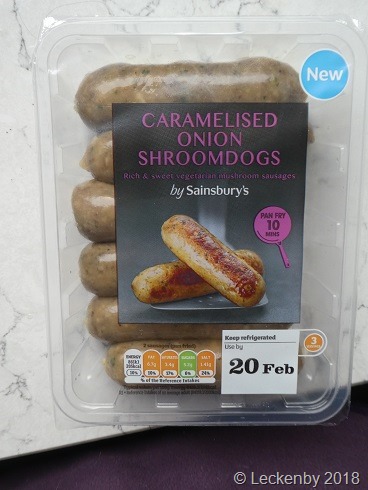
Sunday morning, a cooked breakfast with a difference. We’d spotted in Sainsburys some mushroom saugsages, Shroomdogs, and thought we’d give them a try. They were nice, low in fat (although you have to pan fry them), but we’d rather have proper sausages, or if being good, turkey ones, but they were nice for a change.
I got to have a bit of an explore, not that there is much on this island. Somehow she thought I was up to no good, no idea what made her think that!
Once I’d seared the outside of a joint of Silverside and sat it on top of some onions and carrots in the cast iron pot, given it a tipple of red wine, I sat it on the stove top to slowly cook whilst we had a look at the rest of the museum.
A narrowboat sat in the top lock ready to do a lock demonstration, smoke could be seen rising from one of the cottage chimneys and a couple of ladies were walking round in period dress. There was certainly more activity going on today than yesterday, the volunteers were out in numbers.
![]()
We took time to look around the boats moored outside. The amount of space you get in a Leeds Liverpool short boat is vast, if we ever upgraded to a fat boat I’d want one of these.
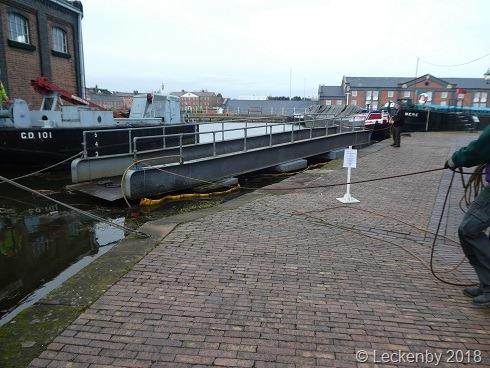
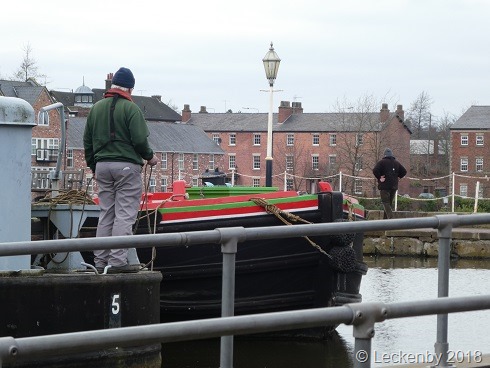
A group of volunteers were getting ready to move George, another short boat, out from under cover. George is one of the last horse drawn short boats, therefore has no engine so was going to have to be poled and pulled out from her position. Ropes were being attached to a pontoon bridge which connects the Island Warehouse to the Toll House. We decided to take a seat and watch what was going on.
![]()
Containers under the pontoon needed to be pumped out so that it could be floated out of the way, this was going to take time so we watched the lock demo for a bit. However having already done 721 locks with Oleanna there was nothing said that we didn’t know already.
The narrow locks were built with problems. The top chamber is getting on for 8/9 feet deep the second one maybe only 5 feet. This means that there is an excess of water and the bottom lock and pound above were prone to flooding, added to this that the bottom lock is around 8 inches lower than the pound above it most probably flooded every time it was used. A channel was added linking the intermediary pound to the one between the two broad locks. This meant that the water had a much larger area to level itself out. As we came down the locks I’d noticed water coming in from the broad side and the bottom narrow lock did look like it was going to flood the towpath and surrounding area, it didn’t due to the underwater channel.
![]()
Once the bridge was moveable it was pulled across and tied up to the side, then it was George’s turn to move. Ropes were flung across to waiting volunteers and a lady poled her from the stern. From where we were it was very obvious that the gap left was far too narrow to get such a broad boat through, but they carried on, realising the bridge would need to move some more. Juggling boats here must have been such a nightmare when there were still the sunken boats about, today it was hard enough.
![]()
We moved up onto a bridge and from our higher position we could see that more space was needed, but we refrained from calling out directions and left it to the volunteers. Eventually after nudging boats about they got George clear and to the top of the locks where they would need to turn her. There were already too many people helping so we decided we’d be better off inside the museum and left them to it.
George will be going out onto the Ship Canal on Wednesday, from where she will be taken onto the River Weaver and taken to Northwich where she will be getting a fresh coat of blacking on her wooden hull.
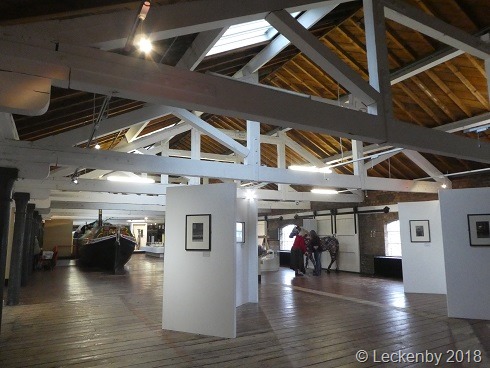
The upper floor of the Island Warehouse is filled with even more interesting things.
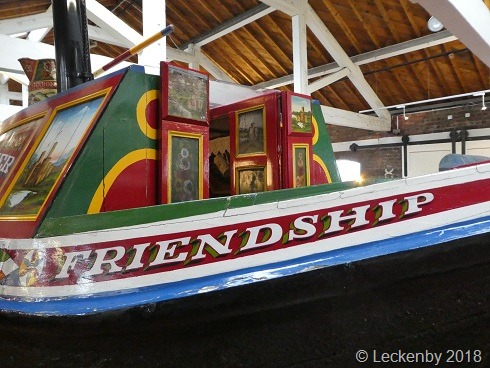
NB Friendship is the centre piece and she deserves to be.
Built by Sephtons at Hawksbury Junction for Joe and Rose Skinner in 1924 she was a horse drawn narrowboat. She cost £300 and the Skinners paid an initial £140 the remainder being gradually paid off by weekly 10 shilling instalments. NB Friendship became their home for over 50 years. Joe purchased Dolly their Mule from the US army at the end of WW1, she was a faithful worker giving 40 years of service. She fell into the Oxford Canal and then developed pneumonia which sadly led to her being put down. Without Dolly it wasn’t the same and with motor boats everywhere it was hard to compete, so they decided to retire at the end of 1959. Even though they had a house at Hawksbury Junction they continued to live on board NB Friendship using the house to store Joe’s scrap and occasionally cook Sunday dinner.
They would go to boat rallies and in 1973 they did their last long trip to Northampton, Joe was now in his 80’s. Joe died following a stroke in 1975 followed a year later by Rose. They had been married 56 years. Friendship was left to Rose’s niece, by 1978 enough money had been raised to bring the boat to Ellesmere Port. Much work was needed, but it was decided that it would be best to store her on dry land and retain the original boat as much as possible. To get her to her location in the museum she had to be cut in half and craned onto the first floor, rolled into position on scaffolding bars where she was put back together.
![]()
![]()
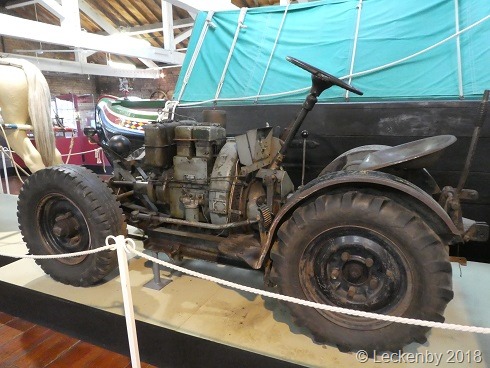
On this floor there is so much, you can rock an ice breaker, I managed to clear 5.3m of ice. You can look around a wooden cruiser, virtual tours of several other boats, watch footage of the Telford Warehouse burning to the ground in 1975. Listen to a navvie having a break, look at wooden patterns that were used for casting lock pieces, 1:24 scale models of hulls and try counting the number of granny squares it took to cover Rainbow.
A good information packed afternoon and we feel that we most definitely got our moneys worth. We could even have returned for some more as we found ourselves skipping over parts. Another £4 to moor another night and some chilled medication to walk back to Oleanna with. Tomorrow when we leave the museum will be closed, so no gongoozlers to help push gates.
Our pot roast beef was delicious, we’ll defiantly be doing that again.
0 locks, 0 miles, 1 more night, 1 moor hen, 4 shroomdogs, 48 hours of lights, 8+ to move a bridge and boat, 2 more voices not needed, 94 years old, 1 special boat, 5.3m, £300, 5 boaty craft stalls, 283 squares, 1 super tasty joint of beef, 1 hearth rug finished.
Pregnancy Trekking. 17th February
| The red dot is where we are moored |
| No warehouses around us today |
| Oleanna would just be through that archway |
One Tree In Chester. 7th February
Chester
A frost greeted us Wednesday morning. Down on the Dee Branch there was a layer of cat ice. Around us was still fluid but back towards the staircase lock there were patches of ice. This is why we’ve stayed put in Chester, waiting for the chilly spell to pass and for the canal to remain liquid so that we don’t get stuck up towards Ellesmere Port. Of course this morning was the morning that Tilly decided to be that little bit more adventurous and manage to cross the towpath, I hadn’t spotted the ice when she went out! I’ve been looking at the one and only tree in Chester for days, weeks, years now! It’s a bit spikey but at least I conquered it. This didn’t take long and anyhow it was cold!
As we had our breakfast a chap appeared with a windlass from down on the Dee Branch. He proceeded to empty the lock, crackling the covering of ice as the levels altered. We first thought that maybe the level gradually drops on the branch, so he was topping it up. Then another chap appeared and pushed open a gate as a boat was reversed, with difficulty, thorough the ice to the chamber. They brought the boat up backwards and reversed it from the lock where it has been sat all day, maybe waiting for some work to be done on it.
A tourist day for us. Grosvenor Museum seemed like a good place to head.
![]()
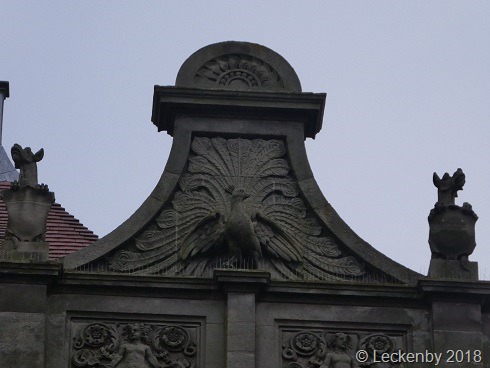
Opened in a purpose built building in 1886, the Grosvenor Museum houses artefacts from both Chester Society for Natural Science and Chester Archaeological Society. An extension was added in 1894, by 1938 the City of Chester took over full control of the museum, looking after the collections and displays. This and admission being free shows somewhat. The building is grand from the outside (peacocks decorating the gables) and the mosaics on the floors and under the dado rail must have taken some work.
![]()
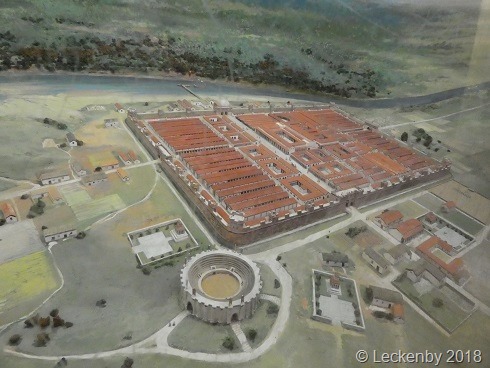
The Romans are to Chester what the Vikings are to York, a large tourist attraction. A large collection of Roman gravestones fills one room, with information on those portrayed in the carvings. A video tells the story of one centurion and his wife, lots of interesting detail on what he wore and their life at Deva the Roman Garrison that became Chester. A large model shows you the layout of the garrison and how it compares to the city’s layout today. Hot water pipes and roofing tiles fill more display cabinets. There is plenty to read, just a shame nobody seems to have proof read it.
Behind the main building is a link into a period house, 20 Castle Street, which was saved from demolition and it’s first period room a Victorian Parlour was put on display in 1955. The house jumps around with it’s displays, Victorian, Stewart, 1920’s, Victorian again, Edwardian, 1970’s all very higgledy piggledy. As we climbed the stairs we felt like we were in a hall of mirrors as the walls and landings didn’t marry up, the floors changing angle every which way possible, it’s possibly the most seasick I’ve felt in a long time.
Back in the main building are collections of stuffed animals and a very large silver collection just down the corridor from the Honourable Incorporation of the King’s Arms Kitchen. This was a drinking, gentleman’s club dating from 1770 and took up residency at the King’s Arms Kitchen public house. This recreation of the room is now used for school parties to have their packed lunches and tours to await their guide.
![]()
This chap sat very patiently for me to take photos of today.
0 locks, 0 miles, 1 tree! 5 minutes off the boat, 1st cat ice, 1 reversed lock, 1 museum not to add to John’s list, 1 loud speaking lady, 1 fish crumble for tea.